Disability Pension for defence personnel is one of the most important welfare benefits available to members of the Armed Forces. It is intended for soldiers, sailors, and air warriors who suffer injury, disease, or permanent disability during service. However, over the years, several audit objections, administrative lapses, delays, and legal disputes have emerged regarding its implementation.
A Parliamentary Public Accounts Committee (PAC) report also highlighted serious concerns relating to Disability Pension. This article presents a detailed analysis of those observations and their implications.
What is Disability Pension?
Disability Pension is a financial compensation granted to defence personnel when:
- The disability is attributable to military service, or
- The disability is aggravated by service conditions, or
- The individual suffers permanent or partial disablement, and
- The disability is certified by a competent medical board.
Traditionally, Disability Pension consists of two components:
- Service Element
- Disability Element
What Was the Main Audit Objection?
The Parliamentary Committee and audit authorities observed several irregularities and systemic issues in disability pension cases. Major concerns included:
Rejection of Genuine Claims
In many cases, service-related disabilities were declared as “Neither Attributable Nor Aggravated (NANA)”, leading to denial of pension benefits.
The Committee raised concern that genuine veterans were being forced into prolonged litigation to secure rightful benefits.
Excessive Government Litigation
PAC reports and judicial observations repeatedly noted that the Government filed a large number of appeals before the Armed Forces Tribunal and higher courts, even in cases where relief had already been granted to veterans.
This resulted in:
- Unnecessary expenditure of public money
- Delay in final settlement
- Mental stress for disabled personnel
Problems in Medical Board Assessments
Audit observations indicated inconsistencies such as:
- Arbitrary reduction in disability percentage
- Different medical boards giving conflicting opinions
- Re-assessment without clear justification
Since pension amount depends on disability percentage, such inconsistencies had a direct financial impact.
Delay in Processing Cases
Sanction, revision, and release of disability pension often took several months or even years.
This caused:
- Financial hardship to injured soldiers
- Dependency issues for families
- Difficulty in rehabilitation and re-employment
Why PAC Observations Are Important
The Public Accounts Committee is one of Parliament’s most important financial oversight bodies. When the PAC raises an issue, it indicates:
- A governance concern
- A financial accountability issue
- A need for policy reform
Its comments on disability pension reflect the seriousness of the matter.
Common Audit Objections in Disability Pension Cases
Misapplication of Attribution Rules
Service conditions were sometimes ignored while assessing disease or injury.
Examples may include:
- High altitude stress
- Extreme climate exposure
- Operational stress disorders
- Hearing loss
- Orthopaedic injuries
Deficiencies in Record Keeping
In many cases:
- Medical records were incomplete
- Injury reports were missing
- Board proceedings were delayed
Such lapses weakened later pension claims.
Repeated Appeals Despite Settled Law
Courts had already settled many legal principles in favour of veterans, yet routine appeals continued.
Incorrect Disability Percentage Assessment
Differences such as 20% versus 30% disability could significantly affect eligibility and pension amount.
Impact on Defence Personnel
Financial Loss
Wrongful denial reduces monthly income and long-term security.
Mental Trauma
Disabled veterans often have to repeatedly visit offices and courts.
Family Hardship
Children’s education, healthcare, and household stability may suffer.
Impact on Morale
Serving personnel may lose confidence in the welfare system.
Stand of the Judiciary
Various courts and the Armed Forces Tribunal have repeatedly held that pension matters involving soldiers should be interpreted liberally and humanely.
Courts have also criticised unnecessary litigation against veterans.
Suggested Reforms
End-to-End Digital Processing : Integrated online systems from medical board to pension sanction.
Presumption in Favour of Soldier : Unless strong contrary evidence exists, a welfare-oriented approach should apply.
Time-Bound Disposal : Claims should ideally be settled within a fixed timeline, such as 90 days.
Restrict Routine Appeals : Appeals should be filed only in cases involving substantial legal questions.
Independent Medical Review Panels : Uniform standards can reduce inconsistency.
What Veterans Should Do
If facing a disability pension dispute:
- Preserve service records
- Maintain all medical documents
- Carefully examine rejection orders
- File representation promptly
- Approach the Armed Forces Tribunal if necessary
Why This Issue Matters Nationally
A soldier who suffers disability while serving the nation deserves fairness and dignity. Disability Pension is not charity—it is an earned entitlement arising from service sacrifice.
Final Conclusion
Audit objections clearly indicate that the Disability Pension system requires greater transparency, compassion, and efficiency. Parliament and the judiciary have both emphasised that disabled defence personnel should not be forced into unnecessary procedural struggles.
A nation that honours its soldiers must ensure timely support and justice for those injured in service.
- CSD Smart Card से सामान कौन खरीद सकता है? CSD Smart Card Rules पूरी जानकारी

- 60 English Grammar Rules for Competitive Exams with Examples | English Error Detection Guide

- Income Tax Rules 2026: सैनिकों, Ex-Servicemen, Disability Pensioners और Senior Citizens के लिए पूरी जानकारी
- Income Tax Rules 2026: सैनिकों, Ex-Servicemen, Disability Pensioners और Senior Citizens के लिए पूरी जानकारी
- 8th Pay Commission Pension Revision: MP Kaushalendra Kumar Raises Concerns Over Exclusion of Pre-2026 Pensioners
- 13 Habits of SSB Candidates: The Ultimate Blueprint to Crack the SSB Interview

- Disability Pension Case: AFT Lucknow ने Retired Soldier को 51% Disability Pension देने का दिया आदेश
- Uniform Pay Fixation for Reemployed Ex-Servicemen: Time for Legal Action as Government Delays Justice

- Pension Commutation Rules 2026: रिटायरमेंट पर पेंशन कम्यूट करवानी चाहिए या नहीं? पूरी Calculation और फायदे

- ECHS Card Annual Validation 2026: बच्चों और माता-पिता के कार्ड का Renewal कैसे करें? Step-by-Step Online Process

- PM-KUSUM 2.0 Scheme: किसानों को Solar Pump और Solar Farming से मिलेगा लाभ, नई कृषि योजनाओं से होगा तालमेल

- India–Tajikistan Defence Cooperation: Rajnath Singh Holds Key Meeting with Tajikistan Defence Minister in Dushanbe

- Indigenous Defence Technology in India: DRDO Gets Projects Worth ₹29,558 Crore, Kaveri Engine Development and Major Reforms Explained

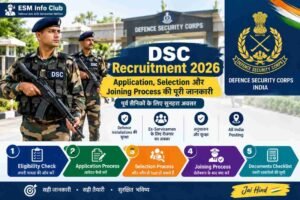
- पूर्व सैनिकों के लिए Defence Security Corps में Selection, Application और Joining Process की पूरी जानकारी : How to Join DSC
- Tri-Services New Rules 2026: Ex-Servicemen और शहीद सैनिकों के परिवार कब और कैसे पहन सकते हैं Medals?

- LTC Entitlement for Defence Personnel 2025: Free Railway Warrant, Air Travel, Road Journey और Leave Encashment के Rules

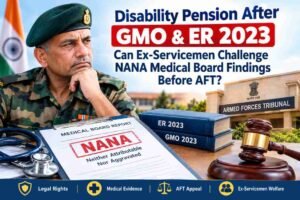
- Disability Pension After GMO & ER 2023: Can Ex-Servicemen Challenge NANA Medical Board Findings Before AFT?
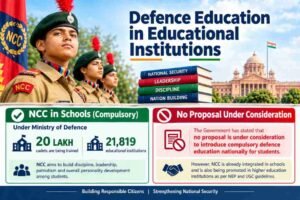
- Defence Education in Schools and Colleges: Government Clarifies Position on Compulsory Defence Education
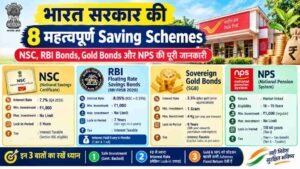
- भारत सरकार की 8 महत्वपूर्ण Saving Schemes: NSC, RBI Bonds, Gold Bonds और NPS की पूरी जानकारी
- DRDO की बड़ी उपलब्धि: 3 साल में 138 Defence Projects पूरे, AI, Hypersonic Technology और Startups पर विशेष फोकस

- 8th Pay Commission News: मई 2027 तक आ सकती है Final Report, जनवरी में रिपोर्ट आने की आधिकारिक पुष्टि नहीं

- ECHS Aadhaar Verification Rules 2026: Ex-Servicemen और उनके परिवारों के लिए नए नियम, OTP Authentication और Medical Treatment के महत्वपूर्ण प्रावधान

- Ex-Servicemen Rules Amendment 2026: मिला पूर्व सैनिकों का Status, जानें Reservation और Re-Employment के लाभ for MNS
- 8th Pay Commission Pension Revision: पुराने Pensioners की पेंशन बढ़ेगी या नहीं? ToR Amendment की मांग क्यों तेज हो रही है?
- India–Mongolia Defence Cooperation: Joint Secretary Visits National Defence University, Reviews Cyber Security Training Centre

- Golf Courses on Defence Land: Lok Sabha Reveals Government Position on A1 Land, Officers’ Recreation and Military Training Facilities

- Defence Disability Pension Rules 2025: Eligibility, Rates, War Injury Pension and Family Compensation
- ECHS Medicine Reimbursement Rules: How Ex-Servicemen Can Claim the Cost of Medicines Not Available at the Polyclinic

- DEFENCE LAND ENCROACHMENT IN INDIA : GOVT ACTION AND OVERVIEW

- Agniveer First Batch to Be Released on 21 November 2026: 25% May Join Navy, Others to Explore Second-Career Options