

Why Disability Pension Case of Supreme Court is Important
Recently, the Hon’ble Delhi High Court dismissed the challenge filed by the Ministry of Defence (MoD) against the orders passed by the Armed Forces Tribunal (AFT) in nearly 300 cases.
These AFT orders had granted disability pension to soldiers whose disabilities had been assessed as “Neither Attributable to Nor Aggravated” (NANA) by the medical boards. The MoD had approached the High Court seeking reversal of these decisions; however, the Court upheld the rulings in favour of the soldiers.
The central issue in these cases revolved around the entitlement to disability pension for ex-servicemen who were released with disabilities assessed as NANA. The AFT had consistently ruled in favour of the petitioners, granting them disability pension by applying the ratio laid down in the landmark Supreme Court judgment in Dharamvir Singh v. Union of India & Others, (2013) 7 SCC 316.
In claims involving disability pensions, a recurring legal question is whether a disease or medical condition suffered by a soldier is attributable to or aggravated by military service. The Dharamvir Singh judgment has become the foundational precedent in such matters. It established that:
If no medical condition was recorded at the time of recruitment, and the disease manifested during service, it must be presumed to be attributable to or aggravated by service, unless conclusively proven otherwise by the authorities.
The Delhi High Court’s recent decision is a major reaffirmation of this legal principle and a significant victory for the rights of disabled soldiers, ensuring that their sacrifices are duly recognised and compensated under the existing pension regulations.
📌 Dharamvir Singh v. Union of India & Ors, (2013) 7 SCC 316
Key Legal Principle from Dharamvir Singh Case:
The Hon’ble Supreme Court laid down a presumption in favor of the soldier, stating that:
If a person is found medically fit at the time of enrolment into the armed forces, and no note of any disease or disability is made in the service record at the time of entry, then any disease which occurs or manifests during the course of military service is presumed to be attributable to or aggravated by military service, unless proved otherwise by the government.
This presumption is based on Regulation 173 of the Pension Regulations for the Army, 1961 and the Entitlement Rules for Casualty Pensionary Awards, 1982.
Application of Dharamvir Singh Doctrine in Subsequent Cases
✅ O.A. Decision (Case Summary):
In a subsequent Original Application (O.A.) filed before an Armed Forces Tribunal (AFT) or similar judicial forum, the following facts were observed:
- The respondent (ex-serviceman) had been enrolled in the Armed Forces after clearing medical fitness standards.
- There was no record or medical entry at the time of recruitment showing that the respondent was suffering from any pre-existing disease.
- During the course of military service, the respondent developed a disease/disability.
- The medical board declared the disability as neither attributable to nor aggravated (NANA) by military service, thereby denying the disability pension.
🧾 Tribunal’s Ruling:
The Tribunal relied upon the principles laid down in Dharamvir Singh’s case and held that:
- Absence of medical notation at entry:
- If the respondent had no disease noted at the time of recruitment, a presumption arises that any disease/disability arising during service is attributable to military service.
- Presumption in favor of soldier:
- The burden to rebut the presumption lies on the authorities. If the Government fails to produce strong evidence proving that the disease was constitutional or pre-existing, the benefit goes to the ex-serviceman.
- Entitlement to disability pension:
- The Tribunal ruled that the respondent was eligible for disability pension, setting aside the NANA opinion of the medical board, which lacked sufficient reasoning.
📚 Legal Doctrines Applied:
- Benefit of Doubt Principle: In military law, when two interpretations are possible, the interpretation favorable to the soldier should be adopted.
- Entitlement Rules, 1982: Rule 5 and Rule 9 suggest that if no note of disability exists at the time of recruitment, the disability is presumed to be due to service.
Significance of Dharamvir Singh Judgment:
This judgment has had a widespread impact on military jurisprudence in India. It has become the guiding precedent in numerous cases where:
- Soldiers were denied disability pensions based on vague or technical medical board opinions.
- The onus was wrongly placed on the soldier to prove service-connection of a disease.
After this judgment, courts and tribunals now look for substantiated reasons from the medical board and do not accept their conclusions blindly.
📝 One Judgement can change the entire Ruling
In summary, the O.A. rightly applied the legal principle from the Dharamvir Singh case, and held that the disease suffered by the respondent is deemed to be “attributable to military service” due to:
- Lack of any medical history at entry,
- Development of the disease during active duty,
- Failure of the government to rebut the presumption.
As a result, the respondent was held entitled to disability pension, reinforcing the protective legal framework for servicemen
- Earned Leave Up to Retirement: Punjab and Haryana High Court Ruling Benefits Government Employees
 Earned Leave Encashment at Retirement: A significant ruling by the Punjab… Read more: Earned Leave Up to Retirement: Punjab and Haryana High Court Ruling Benefits Government Employees
 - Download SPARSH PPO and Pension Slip in your Mobile : Step by Step Process
 SPARSH ek comprehensive digital platform hai jo Ministry of Defence ke… Read more: Download SPARSH PPO and Pension Slip in your Mobile : Step by Step Process
 - Life Certificate Cyber Fraud: Pune में 84 वर्षीय Retired Air Force Officer से ₹4.5 लाख की ठगी, Pensioners रहें सावधान
 Life Certificate के नाम पर Pensioners के साथ Cyber Fraud देशभर… Read more: Life Certificate Cyber Fraud: Pune में 84 वर्षीय Retired Air Force Officer से ₹4.5 लाख की ठगी, Pensioners रहें सावधान
 - UP TGT Teacher Recruitment 2026: 17,735 पदों पर शिक्षक भर्ती, Salary ₹1,42,400 तक, Apply Online की पूरी जानकारी
 उत्तर प्रदेश में Teacher बनने की तैयारी कर रहे युवाओं के… Read more: UP TGT Teacher Recruitment 2026: 17,735 पदों पर शिक्षक भर्ती, Salary ₹1,42,400 तक, Apply Online की पूरी जानकारी
 - Military Veteran Job in Uran, Navi Mumbai: HR Operations Manager for JCO/NCO – Salary ₹8 LPA
 Are you an Ex-Serviceman from the Indian Army, Indian Navy, Indian… Read more: Military Veteran Job in Uran, Navi Mumbai: HR Operations Manager for JCO/NCO – Salary ₹8 LPA
 - Surya Sainik Aramgrah Lucknow: Affordable Accommodation for Serving Soldiers, Ex-Servicemen and Their Families
 Surya Sainik Aramgrah in Lucknow Cantonment is an accommodation facility established… Read more: Surya Sainik Aramgrah Lucknow: Affordable Accommodation for Serving Soldiers, Ex-Servicemen and Their Families
 - CSD Smart Card से सामान कौन खरीद सकता है? CSD Smart Card Rules पूरी जानकारी
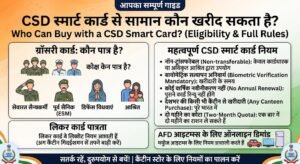 भारतीय Armed Forces के serving personnel, Ex-Servicemen और उनके परिवारों के… Read more: CSD Smart Card से सामान कौन खरीद सकता है? CSD Smart Card Rules पूरी जानकारी
 - 60 English Grammar Rules for Competitive Exams with Examples | English Error Detection Guide
 English grammar is an important part of competitive examinations in India.… Read more: 60 English Grammar Rules for Competitive Exams with Examples | English Error Detection Guide
 - Income Tax Rules 2026: सैनिकों, Ex-Servicemen, Disability Pensioners और Senior Citizens के लिए पूरी जानकारी
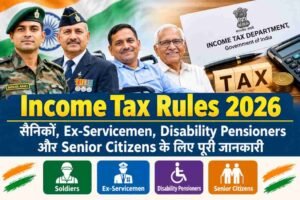 ESM Info Club | Sainik Welfare News | Updated: 22 October… Read more: Income Tax Rules 2026: सैनिकों, Ex-Servicemen, Disability Pensioners और Senior Citizens के लिए पूरी जानकारी
 - Income Tax Rules 2026: सैनिकों, Ex-Servicemen, Disability Pensioners और Senior Citizens के लिए पूरी जानकारी
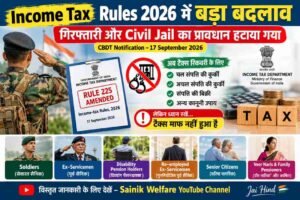 ESM Info Club | Sainik Welfare News | Updated: 22 October… Read more: Income Tax Rules 2026: सैनिकों, Ex-Servicemen, Disability Pensioners और Senior Citizens के लिए पूरी जानकारी
 - 8th Pay Commission Pension Revision: MP Kaushalendra Kumar Raises Concerns Over Exclusion of Pre-2026 Pensioners
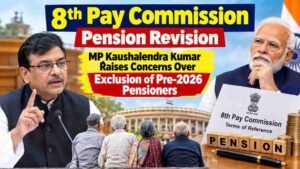 An important development for Central Government pensioners: A reported letter addressed… Read more: 8th Pay Commission Pension Revision: MP Kaushalendra Kumar Raises Concerns Over Exclusion of Pre-2026 Pensioners
 - 13 Habits of SSB Candidates: The Ultimate Blueprint to Crack the SSB Interview
 SSB Expected From a candidate The Services Selection Board (SSB) interview… Read more: 13 Habits of SSB Candidates: The Ultimate Blueprint to Crack the SSB Interview
 - Disability Pension Case: AFT Lucknow ने Retired Soldier को 51% Disability Pension देने का दिया आदेश
 ESM Info Club | Defence Pension News | Disability Pension Update… Read more: Disability Pension Case: AFT Lucknow ने Retired Soldier को 51% Disability Pension देने का दिया आदेश